

10 Principles of Church Management That Will Lead to Church Growth

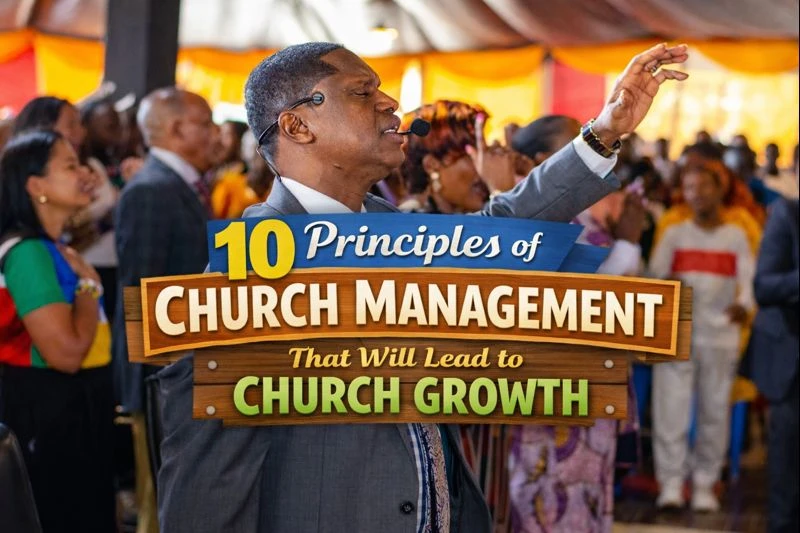
Church growth is not accidental; it is intentional. While the church is primarily led by the Holy Spirit, it is also an organization that requires wise leadership, sound management, and strategic planning. Many churches struggle not because of a lack of prayer, passion, or anointing, but because of poor structure, unclear vision, weak leadership systems, and ineffective management practices.
Biblical church growth happens when spiritual vitality is matched with responsible stewardship. God is a God of order, and throughout Scripture, He works through systems, leadership, and preparation. Jesus Himself modeled effective leadership, delegated responsibilities, planned strategically, and intentionally trained others for ministry. The early church, as recorded in the book of Acts, also demonstrated sound organizational principles that allowed the gospel to spread rapidly and sustainably.
Church management should never be viewed as a replacement for faith or dependence on God. Rather, it is a tool that creates an environment where spiritual life can flourish. When leadership is intentional and management is sound, the church becomes better positioned to disciple believers, reach communities, and sustain growth over time.
Church growth occurs in different forms, including spiritual growth in the maturity of believers, numerical growth through salvation and addition, and structural growth that strengthens leadership, systems, and ministry capacity.
Below are 10 essential principles of church management that, when properly applied, can lead to sustainable church growth; spiritually, numerically, and structurally.
1. Clear Vision and Mission
Every growing church is driven by a clear and compelling vision. Vision answers the question, “Why do we exist?” Mission answers, “What are we called to do now?” When these two elements are unclear, confusion quickly follows, and the church begins to lose direction.
The Bible reminds us, “Where there is no vision, the people perish” (Proverbs 29:18). Without vision, people become discouraged, disconnected, and unmotivated. Programs may continue, but purpose fades.
Effective church management begins with clearly defining:
- The church’s God-given purpose
- Its core values and beliefs
- Its long-term spiritual and organizational goals
Vision must be communicated consistently and intentionally. It should be reflected in sermons, leadership meetings, ministry planning, and everyday conversations. Over time, vision shapes culture. It influences how decisions are made, how resources are used, and how people understand their role in the body of Christ.
When members clearly understand where the church is going and why it exists, unity strengthens, commitment deepens, and growth becomes a shared journey rather than a leadership burden.
2. Godly and Competent Leadership
Leadership is one of the most significant factors in church growth. Churches often grow or decline based on the health, effectiveness, and maturity of their leadership. While spiritual character is foundational, leadership competence is equally necessary.
Effective church leaders demonstrate:
- Spiritual maturity and integrity
- Emotional intelligence and relational wisdom
- Strategic and visionary thinking
- Administrative and organizational skills
- A servant-hearted leadership approach
The apostles in Acts 6 recognized that attempting to do everything themselves was limiting the church’s growth. By delegating responsibilities to qualified individuals, they preserved focus and unity. Scripture records the outcome clearly: “And the word of God spread; the number of the disciples multiplied greatly” (Acts 6:7).
Leadership development is essential for sustainable growth. When leaders intentionally raise and empower other leaders, the church becomes stronger, more resilient, and better prepared for future expansion. Shared leadership reduces burnout and ensures continuity beyond one individual.
3. Strategic Planning and Goal Setting
Faith and planning are not opposites; they work together. Strategic planning is an expression of faith that trusts God while preparing responsibly. Jesus emphasized thoughtful preparation when He spoke about counting the cost before building (Luke 14:28).
Strategic planning involves:
- Assessing the church’s current condition
- Identifying spiritual, organizational, and community needs
- Setting short-term and long-term goals
- Creating clear, actionable steps toward those goals
Growing churches operate intentionally rather than reactively. When goals are clearly defined, progress can be measured, ministries can be evaluated, and adjustments can be made without fear or confusion.
Planning also fosters unity among leaders. When everyone understands the direction and priorities, collaboration improves. Over time, consistent planning brings clarity, focus, and momentum, allowing growth to occur steadily rather than sporadically.
4. Effective Organizational Structure
Structure supports growth. Without it, growth becomes chaotic, overwhelming, and eventually unsustainable. Many churches struggle not because they are failing, but because they have outgrown their existing systems.
A healthy organizational structure:
- Clarifies roles and responsibilities
- Establishes accountability and leadership flow
- Improves communication across ministries
- Prevents burnout and duplication of effort
Moses experienced this reality in Exodus 18 when Jethro advised him to delegate leadership responsibilities. By organizing people into manageable groups under capable leaders, Moses created order and sustainability.
As churches grow, structures must evolve. Informal systems that worked during early stages may no longer be effective later. Wise leaders regularly assess and adjust organizational frameworks to ensure they continue to support the mission rather than hinder it.
5. Financial Stewardship and Transparency
Financial stewardship is a spiritual responsibility with practical implications. Poor financial management damages trust, discourages giving, and weakens the church’s witness in the community.
Effective financial stewardship includes:
- Clear and realistic budgeting
- Transparent financial reporting
- Strong accountability systems
- Ethical handling of all funds
Jesus spoke often about stewardship, emphasizing faithfulness with what God entrusts to His people. Churches that handle finances with integrity inspire confidence and generosity among members.
When financial systems are healthy, the church is better positioned to fund ministry initiatives, support missions, care for the needy, and invest in future growth. Transparency fosters trust, and trust encourages faithful participation.
6. Strong Discipleship Systems
Numerical growth without spiritual maturity leads to shallow Christianity. True church growth is not measured only by attendance, but by transformation.
Strong discipleship systems help believers:
- Grow in biblical understanding
- Develop consistent spiritual disciplines
- Mature in Christlike character
- Discover and use their spiritual gifts
The Great Commission instructs the church not merely to make converts, but to make disciples who obey Christ’s teachings (Matthew 28:19–20).
Discipleship should be intentional and ongoing. When believers are nurtured and equipped, they become spiritually mature, committed, and productive. Mature disciples naturally serve, give, lead, and reproduce spiritually, creating long-term stability and growth.
7. Effective Communication and Information Flow
Communication is the lifeline of church management. Even the strongest vision and best plans can fail without clear communication. Poor communication leads to confusion, frustration, and disengagement.
Healthy churches communicate:
- Vision and values clearly
- Expectations consistently
- Changes transparently
- Information promptly
This includes communication among leaders and volunteers, as well as communication with members and the wider community. Modern tools such as websites, social media, emails, and messaging platforms enhance connection when used purposefully.
When people feel informed and included, trust grows. Participation increases, misunderstandings decrease, and unity is strengthened.
8. Volunteer Mobilization and Empowerment
Volunteers are the backbone of church ministry. Growth depends on mobilizing members to serve according to their gifts, passions, and calling.
Effective volunteer management includes:
- Identifying spiritual gifts
- Providing training and mentorship
- Offering encouragement and recognition
- Creating a healthy culture of service
Ephesians 4:12 teaches that leaders are called to equip the saints for the work of ministry. When members are empowered rather than overburdened, ministry multiplies.
A serving church develops ownership among its members. People no longer see the church as something they attend, but as something they actively build together.
9. Community Engagement and Outreach
Growing churches look outward, not inward. Jesus called His followers to be salt and light, engaging the world with compassion and truth.
Effective outreach involves:
- Understanding the needs of the surrounding community
- Building genuine relationships beyond church walls
- Demonstrating Christ’s love through practical service
- Sharing the gospel in relevant and respectful ways
When churches address real spiritual, emotional, and physical needs, they build trust and credibility. Outreach-focused churches naturally attract people searching for hope, healing, and belonging.
Community engagement reflects God’s heart for the lost and keeps the church mission-centered.
10. Continuous Evaluation and Adaptability
Church growth requires humility, learning, and flexibility. What worked in one season may not work in another. Healthy church management includes regular evaluation and a willingness to adapt.
This involves:
- Assessing ministry effectiveness
- Identifying areas needing improvement
- Adjusting methods without compromising truth
- Remaining sensitive to cultural and generational shifts
The early church continually adapted as it grew, introducing new leadership roles and adjusting ministry approaches. Their willingness to change methods while remaining faithful to the message allowed growth to continue.
Churches that evaluate and adapt remain relevant, effective, and fruitful across generations.
Conclusion
Church growth is a divine-human partnership. God gives the increase, but He calls leaders to steward His church wisely. Sound church management does not replace spiritual dependence; it supports it.
When vision is clear, leadership is strong, planning is intentional, structures are healthy, finances are stewarded faithfully, discipleship is deep, communication is effective, volunteers are empowered, outreach is intentional, and adaptability is embraced, churches are positioned for sustainable growth.
A well-managed church creates an environment where the Holy Spirit can work freely, believers can mature fully, and the mission of Christ can advance powerfully—now and for generations to come.
